CGI & Digital Merchandising
Can AI Replace Product Photography?
AI can generate convincing lifestyle imagery, but product accuracy is harder. Discover why giving AI structured evidence beats asking it to guess your product details.
Short answer: yes, in many cases. But the quality of the result depends heavily on how well AI can understand the product you give it.
AI-generated product imagery has reached the point where retailers and manufacturers can create convincing lifestyle and commercial imagery without photographing every product in every environment.
But there is an important distinction between generating a beautiful image and generating an accurate image of a specific product.
If you are selling the product shown in the image, accuracy matters.
AI is very good at creating images. Product accuracy is harder.
Give an image generator a prompt for "a beige boucle sofa in a Scandinavian living room" and it can produce something convincing in seconds.
Give it a photograph of your specific beige boucle sofa and ask it to place that exact product into twenty different rooms, and the problem becomes much more complicated.
The AI needs to preserve the things that make your product your product: - proportions and scale - silhouette and construction - materials and finishes - colors - seams, stitching and upholstery details - legs, hardware and joinery - details that may not be visible in the original image
The more information the AI has, the less it needs to invent.
And that is currently one of the most important rules for using AI successfully in product imagery:
Don't make the AI guess if you can give it evidence.
01 / Reference Data
Better inputs create better AI product images
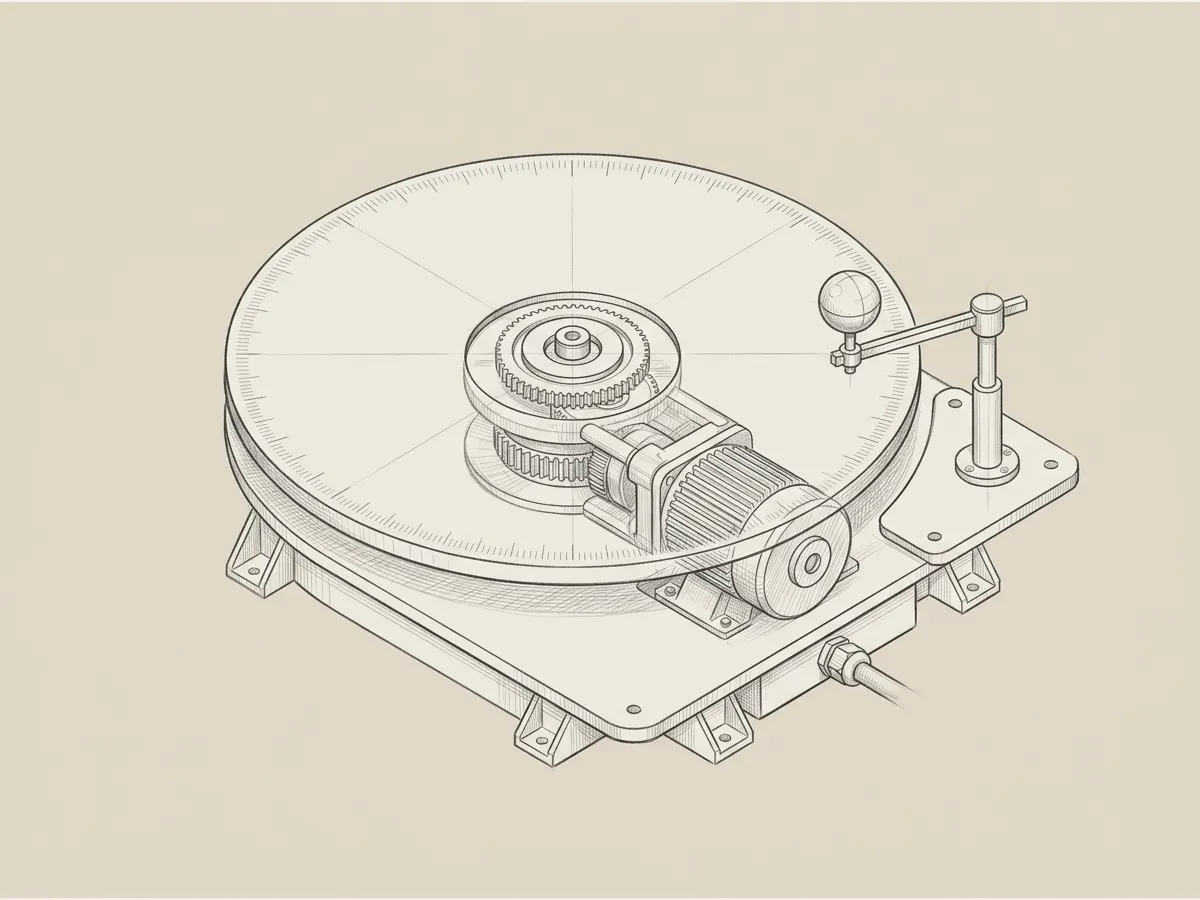
Today, one of the strongest starting points for AI-generated product imagery is a clean set of reference images.
Ideally, that means having accurate views of the:
Front · Back · Side · Top · Three-quarter
These images should have correct perspective, clear product proportions, good lighting and as little visual interference as possible.
Think of them less as photographs and more as product information.
A clean three-quarter view tells the AI something a front elevation cannot. A back view reveals construction details that might otherwise be invisible. A side view establishes depth and proportion.
Every additional piece of reliable information reduces uncertainty.
The problem with incomplete product information
Now imagine giving the AI only a front photograph of a sofa.
What does the back look like?
How deep are the arms?
Does the upholstery continue around the rear?
How are the legs positioned?
What happens to the seam around the corner?
The AI still has to produce an answer.
So it predicts.
Sometimes that prediction is surprisingly good. Sometimes it quietly redesigns your product.
That distinction matters enormously in e-commerce.
A beautiful campaign image can tolerate creativity. A product image that influences a purchasing decision cannot tolerate the same level of invention.
Factory-floor photos aren't necessarily enough
This is where many companies will encounter problems.
If the source material consists of a few smartphone photographs taken on a factory floor, there may be lens distortion, poor lighting, visual clutter, partially obscured details and inconsistent perspective.
AI can still do remarkable things with those images.
But you are asking it to solve two problems simultaneously:
First: understand what the actual product looks like.
Second: create the new image you requested.
Cleaner source information removes some of that uncertainty.
There are increasingly sophisticated ways of reconstructing products from photography and video, and these technologies will continue improving rapidly. But for most commercial teams today, the principle remains straightforward:
Better product data produces more reliable product imagery.
02 / Environment Synthesis
Can AI create lifestyle images without a photoshoot?
This is where the opportunity becomes particularly interesting.
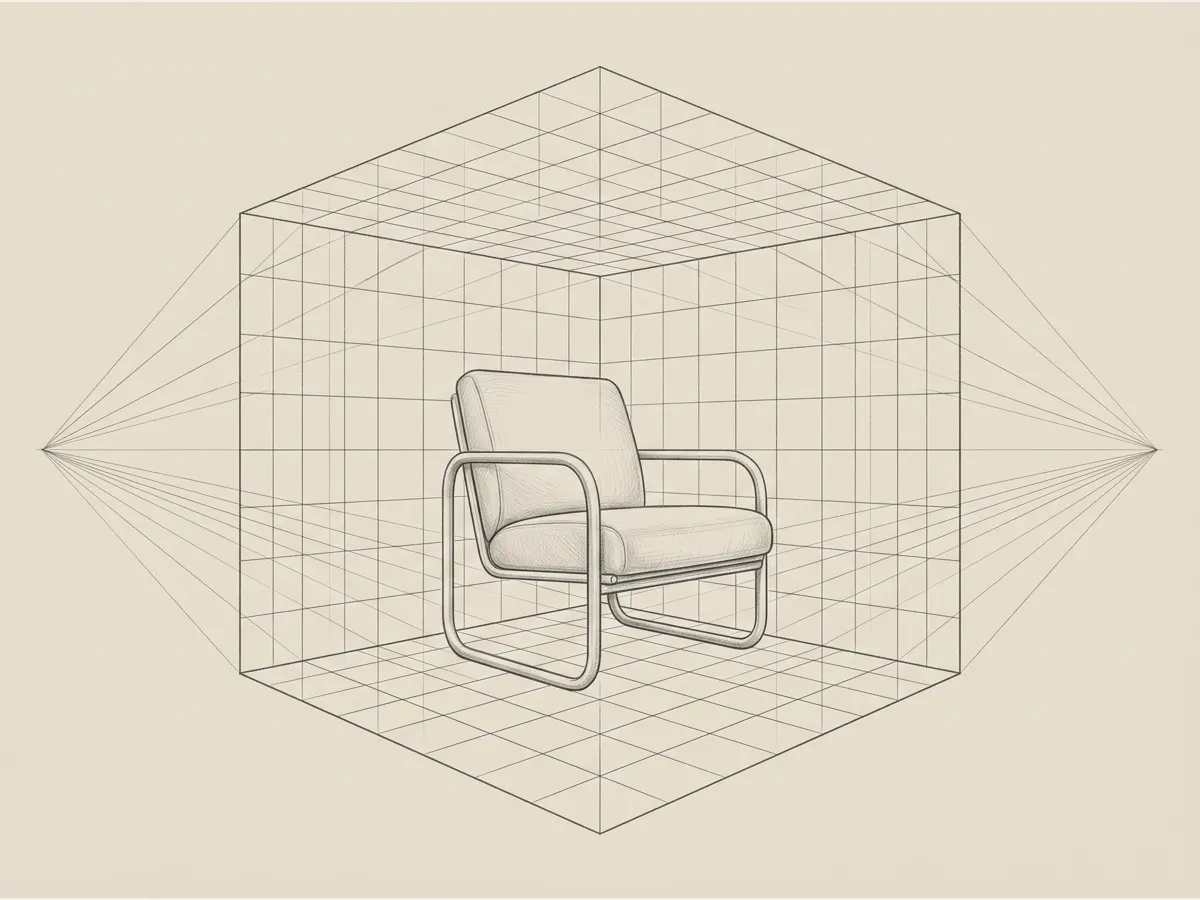
Once the product is represented accurately enough, AI can be exceptionally powerful for generating environmental imagery.
Instead of physically shipping a sofa to a studio, building a room set, styling it, lighting it, photographing it and then dismantling everything, a team can potentially generate multiple environments digitally.
One product could appear in:
a Vancouver apartment, a Montreal loft, a California home or a completely imaginary campaign environment.
The product remains constant while the context changes.
That creates possibilities beyond simply reducing photography costs.
Retailers can create more imagery per SKU. Products can potentially be marketed before physical samples arrive. Campaign concepts can be tested more quickly. Imagery can be localized for different markets, seasons and customer segments.
The creative possibilities become enormous.
But there is a condition:
The product itself still needs to be right.
AI does not eliminate quality control
There is another part of the workflow that companies should not remove: human review.
Generative AI can hallucinate.
A leg can move slightly. An edge band can disappear. A material can become too reflective. Upholstery construction can change. A chair can appear subtly too large relative to the dining table beside it.
Many of these errors are easy to miss because the overall image still looks plausible.
That makes product imagery particularly interesting from a quality-control perspective.
The question isn't simply:
"Does this image look real?"
It is:
"Is this an accurate representation of the product we are selling?"
Those are very different standards.
For commercial imagery, we recommend a human quality layer checking at least product proportions, scale within the environment, color, material properties, construction details and consistency with the physical product.
Over time, AI will increasingly perform this quality-control step itself. One model may generate the image while another compares the output against known product information and flags discrepancies.
But accountability still matters.
So, can AI replace product photography?
For some product imagery, yes, absolutely.
For others, not yet.
And in many organizations, the most effective solution won't be choosing between photography, CGI and AI at all.
It will be a hybrid production system that uses the right technology for the right asset.
Traditional photography may remain valuable for certain campaigns and material stories. CGI remains exceptionally powerful when precise geometry and material control are required. Generative AI dramatically expands the speed and variety with which environments and creative content can be produced.
The interesting question is therefore becoming less:
"Can AI replace photography?"
and more:
"What information does AI need to represent a product accurately?"
Because once an AI system actually understands the product, photography is only one of the things that begins to change.
It can generate lifestyle imagery. Campaigns. Video. Different environments. Different markets. Potentially instructions, merchandising content and entirely new customer experiences.
And that leads to a much bigger question:
How does AI actually understand a product?
That's where things get really interesting.
Next: How Does AI Understand a Product? →
Frequently asked questions
Can AI replace traditional product photography?
Yes, for many commercial and lifestyle applications, provided the AI receives accurate product information. However, AI cannot reliably replace photography if it is forced to invent unseen geometry, construction details, or exact material textures without structured reference evidence.
What reference images does AI need to accurately represent a product?
A complete reference set should include clean front, back, side, top, and three-quarter views with accurate perspective and consistent lighting. These views function as product data, reducing visual ambiguity and preventing the AI from hallucinating missing construction details.
Why is human quality control essential in AI product imagery?
Generative AI can introduce subtle errors, such as drifting dimensions, altered joinery, shifted hardware, or inaccurate reflections, that look plausible at first glance. Human review verifies that the output remains an honest and legally defensible representation of the manufactured product.
Why does AI struggle with product accuracy compared to general image generation?
Generating an attractive generic image requires only creative plausibility. Generating an image of a specific commercial product requires exact preservation of proportions, silhouette, joinery, seams, upholstery, hardware, and brand finishes, which generative models cannot guarantee without strict reference constraints.
Can AI generate lifestyle room scenes without a physical photoshoot?
Yes. Once a product is accurately defined, AI can place that identical product into multiple distinct environments, such as apartments, lofts, or regional home styles, allowing brands to localize marketing and test campaign concepts without shipping physical samples.
What is a hybrid production system in product visualization?
A hybrid system combines the specific strengths of traditional photography for distinct material stories, 3D CGI for precise geometric and lighting control, and generative AI for rapid environmental rendering and localized visual variations.
Tell us what you are working on.
Send an idea, a drawing, a sample or a whole assortment. We will identify what is missing and the right next step.
Start a conversation