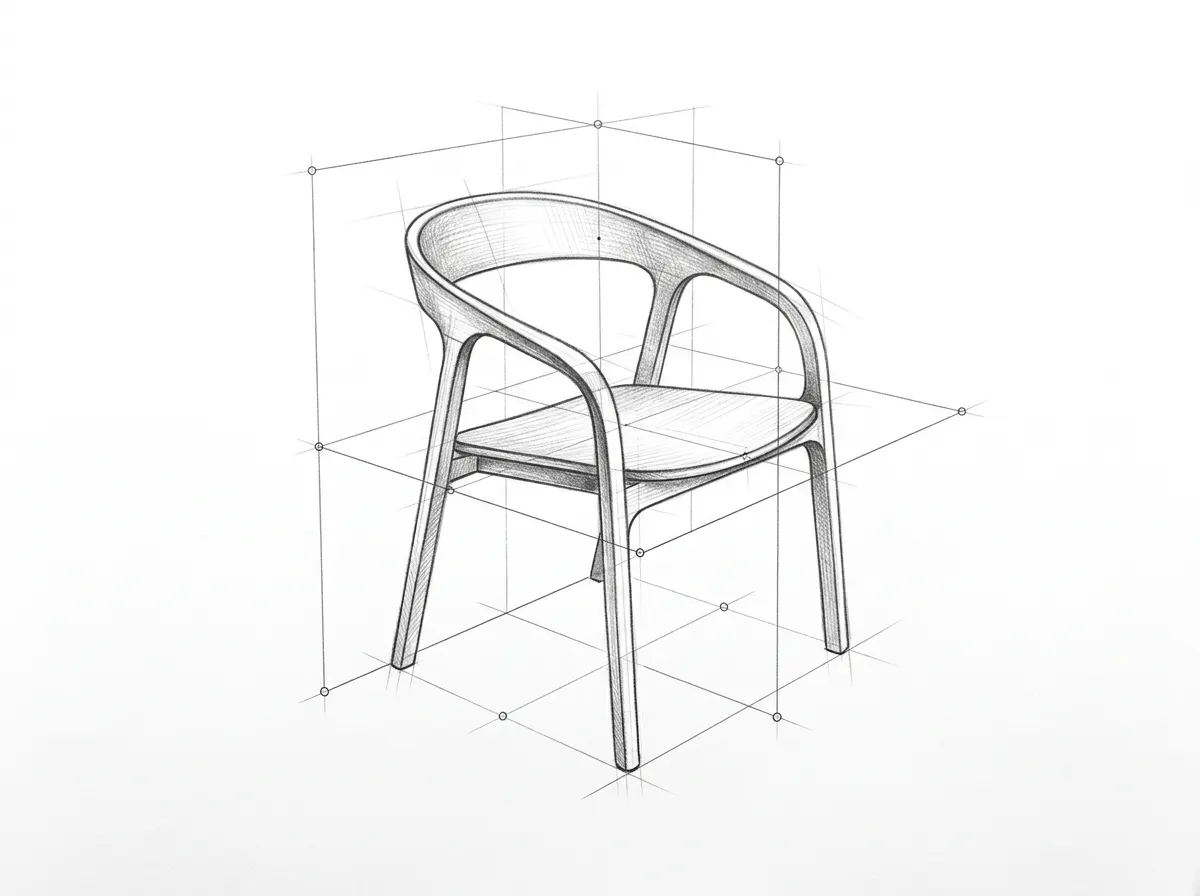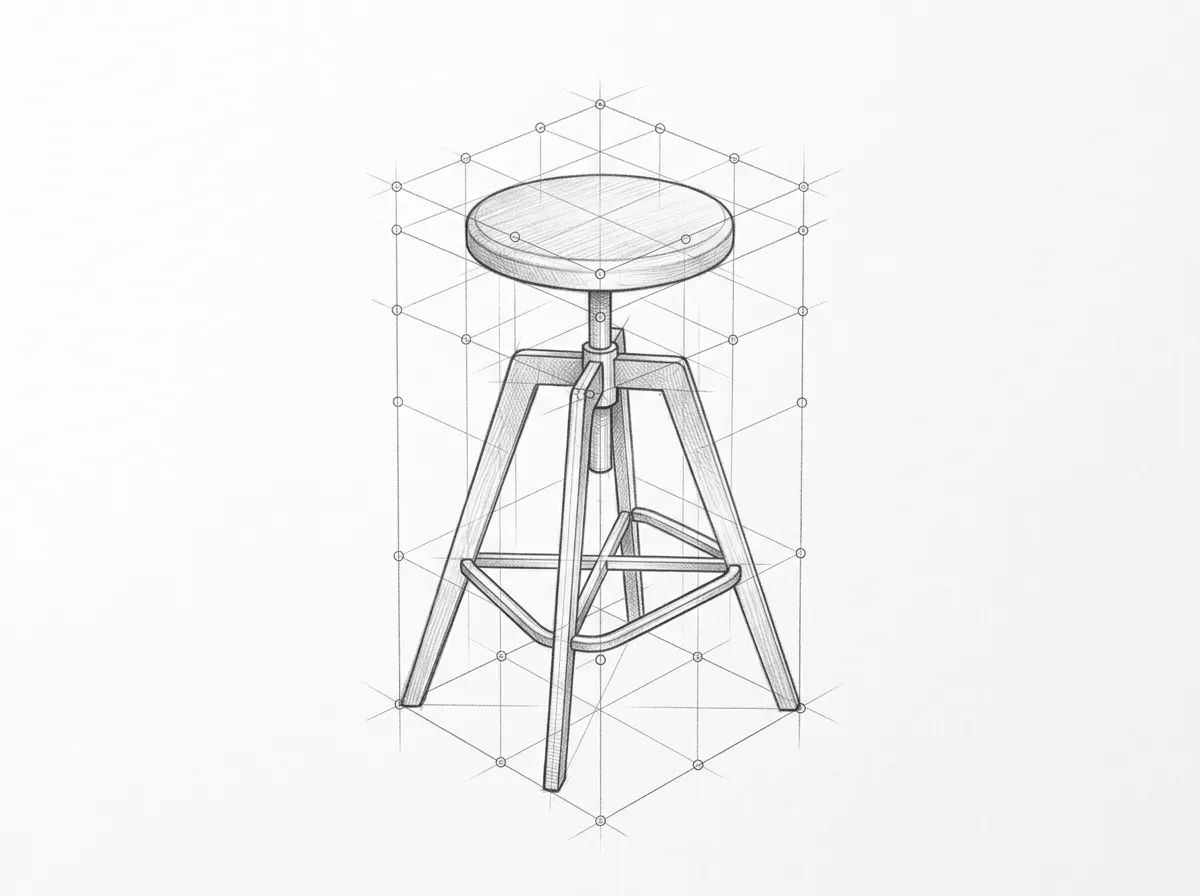
The same product image can be understood very differently by AI depending on the information structure around it. A Carnegie Mellon study found package-material accuracy jumping from 19% to nearly 87% without changing the image itself.**
If you're trying to optimize ecommerce product images for Google AI Overviews, AI shopping or other AI-driven discovery tools, most advice starts with the picture:
The same product image can be understood very differently by AI depending on the information structure around it. A Carnegie Mellon study found package-material accuracy jumping from 19% to nearly 87% without changing the image itself.
If you're trying to optimize ecommerce product images for Google AI Overviews, AI shopping or other AI-driven discovery tools, most advice starts with the picture:
Use a clean background. Make the product large in the frame. Upload a high-resolution image. Avoid text overlays. Use the right file format.
None of that is bad advice.
But it misses the more important question:
What makes an AI system correctly understand what is actually in the image?
A 2024 ecommerce study involving researchers at Carnegie Mellon University offers a surprisingly clear answer.
When a vision-language model was asked to extract product information from raw images without much structure, it identified package material correctly only 19.05% of the time.
Using the same images, a more structured method achieved 86.67% accuracy.
For product category, the difference was even more dramatic: 0% accuracy in the zero-shot baseline versus 97.14% with the full method.
The pixels didn't change.
The context did.
01
So how should you optimize product images for AI shopping?
Start with good images, but don't stop there.
The strongest product image for an AI system is not simply a technically perfect JPEG or WebP. It is an image connected to clear, explicit and consistent product information.
That means the system should not have to guess whether a chair is walnut or oak, whether the upholstery is wool or polyester, whether the product is a dining chair or lounge chair, or whether two visually similar products are separate products or color variants.
The image shows the product.
The surrounding data tells the system what the product actually is.
That distinction matters.
02
What did the Carnegie Mellon study actually test?
The researchers were studying how structured ecommerce knowledge could be created automatically from product images.
They collected 105 valid ecommerce product images and tested how accurately AI could extract properties including: - primary package color - package material - package shape - product category - weight
The images were resized to 448 × 448 pixels for the experiment.
The researchers then compared different ways of asking AI to interpret those images.
The results were striking:
| Product attribute | Basic zero-shot extraction | Full structured method |
|---|---|---|
| Primary color | 26.67% | 82.86% |
| Package material | 19.05% | 86.67% |
| Product category | 0.00% | 97.14% |
The experiment did not make the source images prettier.
It didn't increase their resolution.
It didn't change the background.
Instead, the researchers changed the system used to interpret them.
03
Why did the AI suddenly get so much better?
The full method gave the model something much closer to the way a good ecommerce database already works.
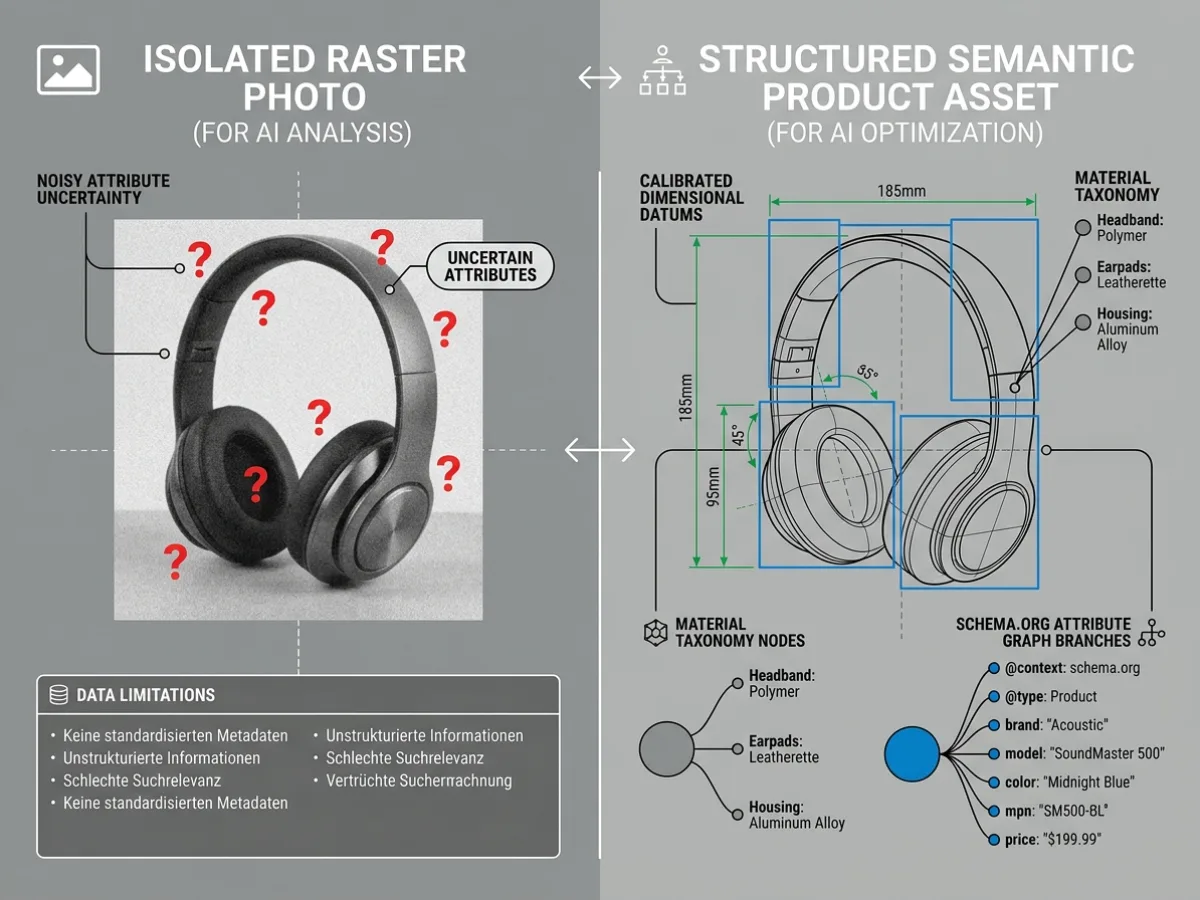
Instead of saying, in effect:
Look at this picture and tell me what you see.
the system gave the AI a defined structure of information it was expected to identify.
The process included a product schema, multiple rounds of visual extraction, additional reasoning about missing information and a constrained structured output.
In plain English:
The AI knew what questions it was supposed to answer.
That is enormously different from simply asking a model to describe an image.
Imagine showing someone a photograph of a sofa and saying:
"Tell me about this."
You might get:
Modern beige sofa with rounded arms in a contemporary interior.
Now give them a form containing:
Product category: Frame material: Upholstery material: Upholstery color: Seat count: Width: Collection: SKU:
The photograph hasn't changed.
But the task has.
And the answers become much more useful.
04
Does image quality still matter?
Absolutely.
Google's current Merchant Center guidance recommends clear, accurate product images, generally with the product occupying around 75–90% of the frame. Google recommends high-resolution imagery and accepts formats including JPEG, WebP and PNG. Promotional overlays and watermarks can also cause problems.
Those rules help Google crawl, present and use the image effectively.
But they solve a different problem.
Image quality makes the product easier to see.
Structured product information makes the product easier to understand.
You need both.
05
Do product images need a white background for Google AI?
Not always.
A clean main product image is still extremely useful, and Google recommends solid white, transparent or similarly neutral presentation in many Merchant Center contexts.
But staged and lifestyle images are also accepted, and Google's product structured-data guidance recommends providing multiple useful high-resolution images where appropriate.
The more important question is whether the visual representation and the product information agree.
If the product is listed as:
Smoked oak dining chair / natural linen upholstery
the imagery should show that product and that variant.
The structured product information should say the same thing.
The Merchant Center feed should say the same thing.
The visible product page should say the same thing.
AI systems should not have to reconcile four competing versions of the truth.
06
Is there a special way to optimize images for Google AI Overviews?
This is where some current advice gets ahead of the evidence.
Google says there are no additional technical requirements or special optimizations required specifically for AI Overviews or AI Mode.
Its recommendation is to continue doing the fundamentals well: - make important content crawlable - provide useful information in text - use relevant high-quality images - keep structured data consistent with visible content - keep Merchant Center information accurate and current
So there is no known magic combination of image dimensions, background color or file format that guarantees inclusion in an AI Overview.
And the Carnegie Mellon research was not a Google ranking experiment.
It should not be presented as one.
What the study gives us is something different - and arguably more useful:
Evidence that AI understanding of ecommerce imagery improves dramatically when visual information is paired with a defined information structure.
07
What does this mean for a furniture brand?
Consider a simple product image of an upholstered dining chair.
A human buyer may immediately see: - wood frame - beige upholstery - curved back - four legs - contemporary style
But those observations leave a lot unanswered.
Is the frame solid oak?
Oak veneer?
Ash?
Is the upholstery linen, polyester, wool or a performance blend?
Is the finish natural oak, white oak, smoked oak or walnut stain?
What are the dimensions?
What is the SKU?
Which collection does it belong to?
Which other finishes are variants of the same product?
Which image represents which colorway?
A model can try to infer those answers visually.
But inference is exactly where uncertainty enters the system.
A better product record gives the agent something explicit to work with:
Category: Dining chair Frame: Solid ash Finish: Smoked oak Upholstery: 92% polyester / 8% linen Color: Warm ivory Width: 520 mm SKU: VH-DC-104-SO-IV Variant group: VH-DC-104
Now the image is no longer carrying the entire informational burden.
It becomes visual evidence attached to a structured product identity.
08
Can AI tell materials and colors from product photographs?
Sometimes very well.
Sometimes surprisingly badly.
That's one of the most useful lessons from the CMU results.
Color sounds visually obvious, yet the zero-shot system identified primary package color correctly only 26.67% of the time in the benchmark.
Package material was lower still at 19.05%.
That doesn't mean current AI models can only recognize colors one-quarter of the time.
The experiment used a particular dataset, model and evaluation method.
It means something more important:
You should not build an ecommerce information architecture around the assumption that an AI system will reliably infer critical product attributes from pixels alone.
If an attribute matters commercially, state it.
09
What product information should sit behind your images?
At minimum, make important product attributes explicit wherever they are relevant to your category.
For furniture that may include: - product type - SKU - collection - dimensions - materials - finish - upholstery - color - construction - variant relationships - availability - price - shipping information - image-to-variant relationship
Google already supports Product structured data for many of these ecommerce relationships and specifically recommends structured data because it can improve the accuracy of Google's understanding of product information.
For products available in multiple colors, materials or configurations, Google also supports ProductGroup and variant markup to make those relationships explicit.
10
The mistake is treating every product image as an isolated JPEG
This is the larger change AI shopping creates.
Historically, teams have often treated the asset and the product data as separate things.
The photography team produces images.
The merchandising team writes descriptions.
The ecommerce team enters attributes.
The engineering team holds technical information.
The factory has another specification.
The retailer receives another spreadsheet.
Humans are remarkably good at mentally stitching those pieces together.
Machines benefit when they don't have to.
The future-ready version of a product image is therefore not merely:
chair_front_white.jpg
It is:
an image attached to a known product, known variant, known material, known finish and known set of attributes.
That is a fundamentally different kind of asset.
11
So what should ecommerce teams actually do?
Don't abandon the image-quality checklist.
Use it as the first layer.
Produce clear, accurate, high-resolution images in which the product is easy to identify.
Then build the second layer:
Give those images structured product truth.
Make your product attributes explicit.
Keep your PDP, structured data and Merchant Center feed aligned.
Connect variants correctly.
Use accurate product terminology.
Keep image-to-SKU and image-to-variant relationships intact.
And avoid asking an AI system to infer information you already know.
Because the most interesting finding in the research isn't that AI is bad at looking at pictures.
It's that the same picture becomes dramatically more useful when the system knows what it is looking for.
12
The takeaway
A better product photo helps AI see the product.
Better product data helps AI know the product.
For AI-driven commerce, you increasingly need both.
Frequently asked questions
How do I optimize product images for Google AI Overviews?
Follow Google's normal Search, image and ecommerce best practices: provide clear high-quality images, make them crawlable, keep important product information available as text, use accurate Product structured data where appropriate, and keep your Merchant Center information current. Google says there are no separate technical requirements specifically for AI Overviews or AI Mode.
Does structured data help AI understand product images?
Structured data and product feeds give systems explicit product information rather than requiring them to infer everything visually. Google says structured data can improve the accuracy of its understanding of product content. Separately, the CMU ecommerce study showed large accuracy improvements when image extraction was guided by a predefined schema and additional reasoning.
Do product images need a pure white background?
Not universally. Google generally recommends clean white, transparent or light backgrounds for main commerce imagery, but staged and lifestyle images can also be acceptable. The correct approach depends on the specific Google surface and image purpose.
Can AI identify furniture materials from an image?
AI can infer visual materials, but visual inference should not be treated as authoritative product data. If material information matters (for example solid oak versus oak veneer), it should be stated explicitly in the product data.
Should every product variant have its own image?
Where appearance changes by color, material or another visual variant, variant-specific imagery makes the relationship clearer for shoppers and machines. Google also provides structured-data support for grouping product variants.
Continue with the next question: How many product images does an AI agent actually need? →