Product Development
When Should You Reuse Existing Factory Tooling Instead of Designing a New Product From Scratch?
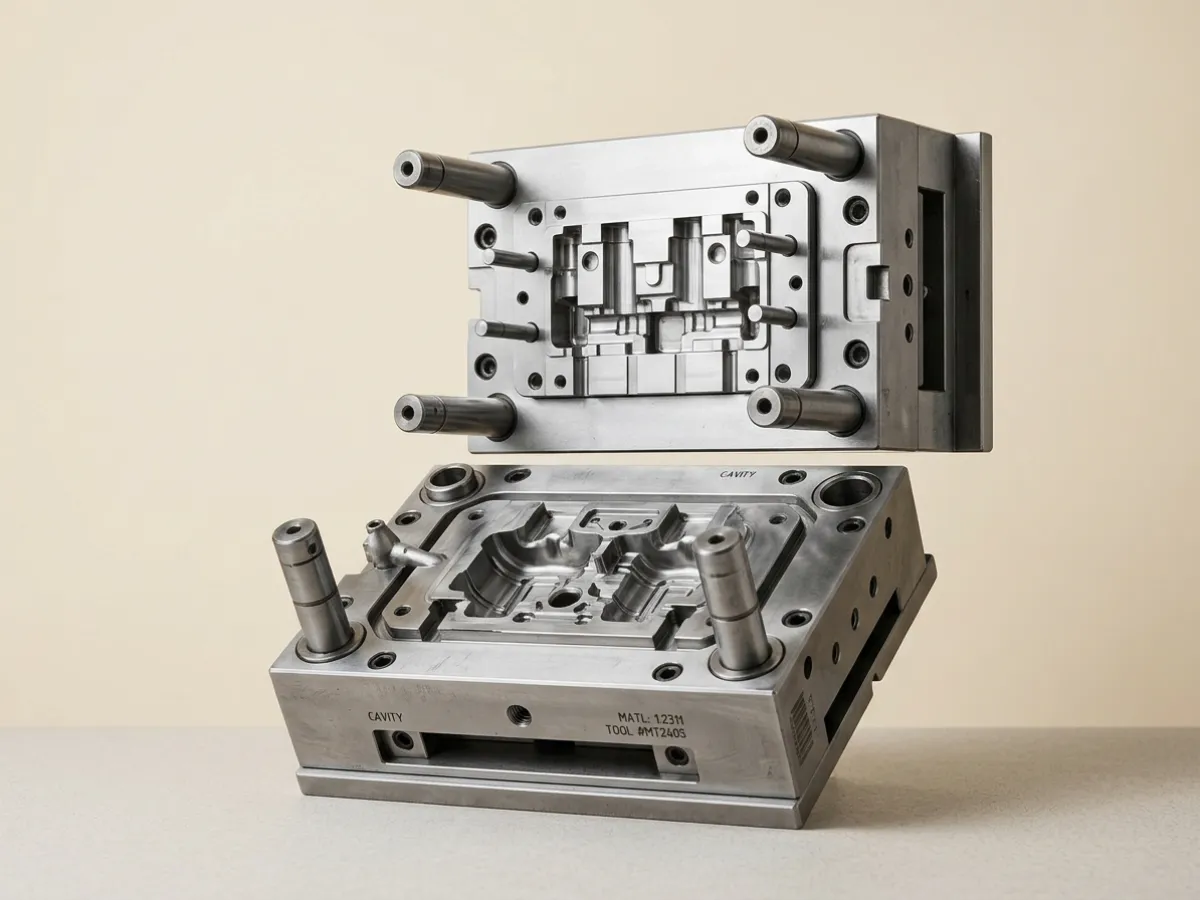
Designers are often rewarded for creating something new.
A new form.
A new mould.
A new construction.
A new process.
But new is not always better.
In physical product development, one of the smartest decisions you can make is to look at what the factory already has before deciding what needs to be created.
Existing tooling can reduce cost, shorten development time, lower technical risk, and sometimes reveal product opportunities that would be difficult to justify from a blank sheet.
The question is not whether reuse is less creative.
The question is whether new tooling creates enough additional value to justify the investment.
When does it make sense to reuse existing factory tooling?
Existing tooling is worth considering when the underlying form, construction, or manufacturing method already satisfies most of the product requirements.
That might include: - moulds - dies - jigs - fixtures - extrusion profiles - standard components - established material sizes - existing packaging formats - proven production processes
If the factory already knows how to make something reliably, there may be significant value in starting there.
A product does not need to begin from zero to be well designed.
01 / Tooling Economics
Existing tooling can dramatically reduce development cost
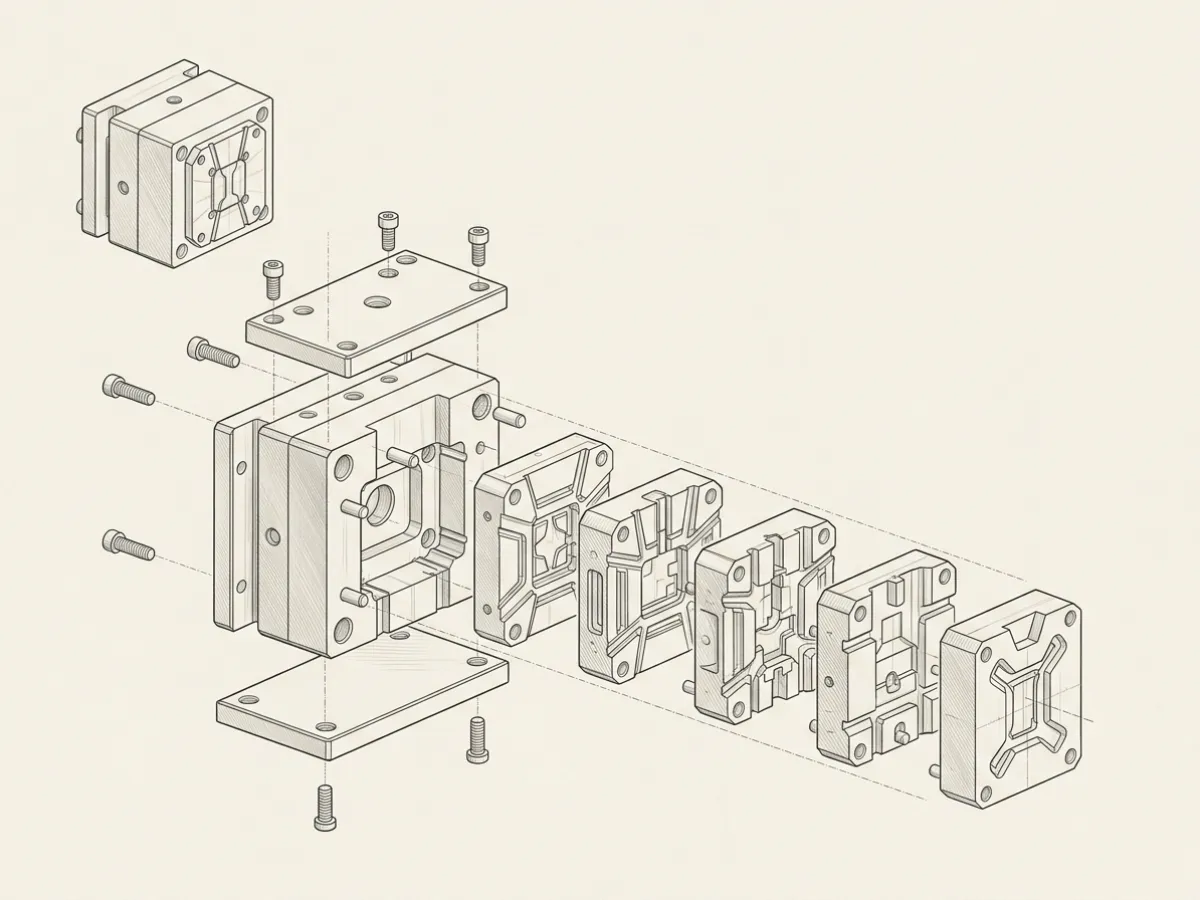
New tooling can be expensive.
Depending on the product category, a new mould or production setup can require significant upfront investment before a single sale is made.
That investment can make sense when the product requires a genuinely new form, function, performance characteristic, or competitive advantage.
But if the new tool only creates a slightly different version of something the factory already makes well, the return may be difficult to justify.
Reusing existing tooling can allow product teams to redirect investment toward the parts of the product that customers may actually notice.
That could mean: - better materials - improved finishes - stronger packaging - better hardware - improved ergonomics - upgraded merchandising - additional variants - better quality control
The design budget is still being used.
It is simply being used where it can create more value.
Existing tooling can reduce technical risk
A tool that has already been used in production carries information.
The factory understands how material flows through it.
They know the tolerances.
They know where defects tend to occur.
They understand production speed.
They may already know which materials work best.
They have likely solved problems that a new tool has not yet revealed.
That knowledge has value.
New tooling introduces uncertainty.
It may require sampling, adjustment, rework, and additional engineering before production is stable.
For businesses trying to move quickly or test an unfamiliar category, reducing that uncertainty can be extremely useful.
Reuse can shorten speed to market
The product development timeline is often driven by more than design.
Tooling design, fabrication, testing, revision, and validation can add weeks or months before production begins.
If an appropriate tool already exists, much of that work may disappear.
The team can move more quickly into: - sampling - finish development - packaging - quality validation - merchandising - launch preparation
That can make existing tooling particularly valuable for: - seasonal launches - category tests - smaller brands - limited initial runs - fast-moving retail programs - companies validating demand before making larger capital investments
02 / Archive Discovery
Existing tooling can reveal opportunities you would not design from a desk
This is one reason factory visits matter.
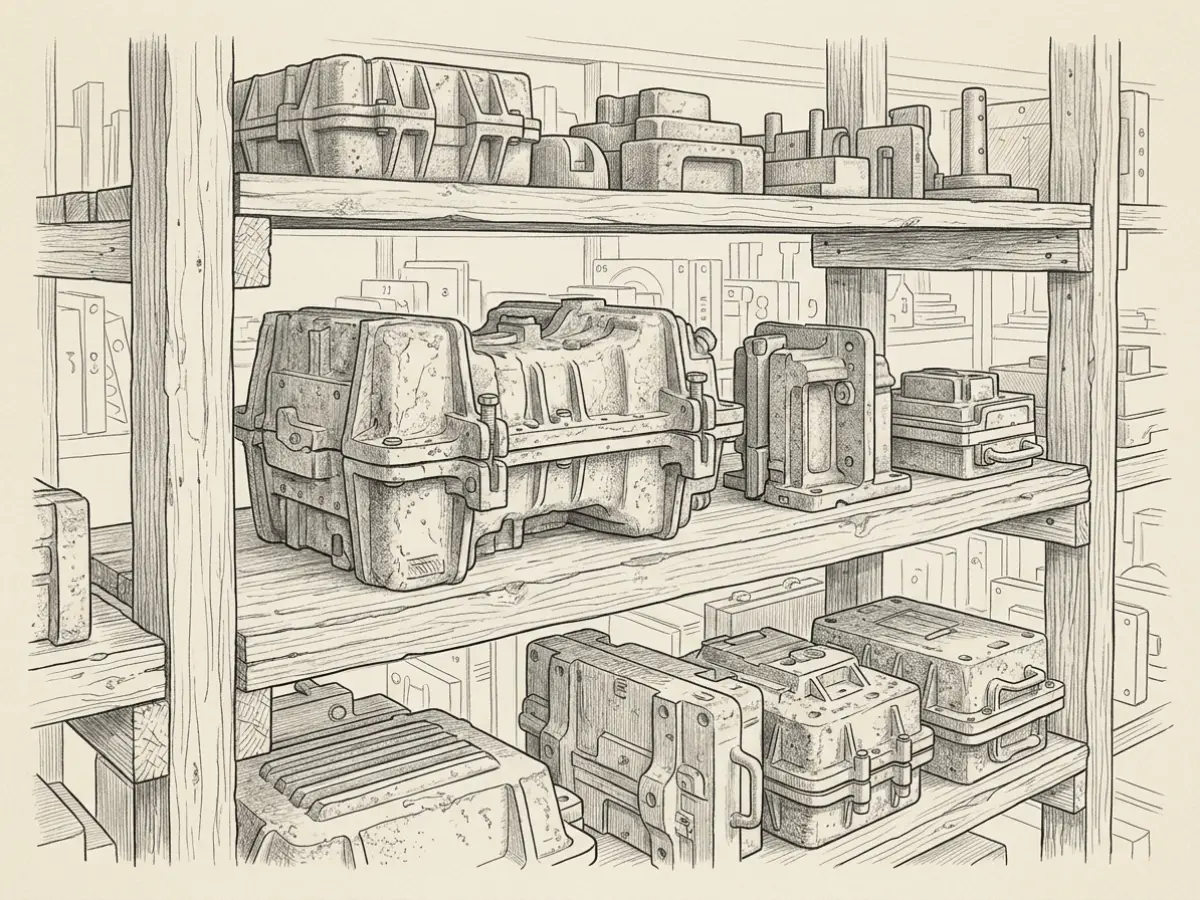
Factories often contain decades of physical knowledge that does not appear in supplier catalogues.
There may be moulds that are no longer actively marketed.
Machinery may have capabilities nobody mentioned in the original brief.
A production line may already create a component that could become the basis of another product.
Factories may also have historical products, samples, materials, or tooling that can be reinterpreted for a different market.
You only see those opportunities if you understand what the factory can actually do.
One of the most useful questions a product designer can ask is:
What do you already make exceptionally well?
The answer can be more commercially valuable than starting with:
What can we invent?
Reuse does not mean copying the existing product
There is an important distinction between reusing tooling and simply reproducing an existing product unchanged.
The tooling may only establish part of the design.
A product can still be transformed through: - finish - colour - material - secondary operations - hardware - scale - combination with other components - packaging - merchandising - assortment strategy
Sometimes a relatively small intervention can completely change how an existing form is perceived.
That is where design judgement becomes important.
The challenge is to identify what already works and what actually needs to change.
03 / CMF Revival
A heritage mould can still produce a contemporary product
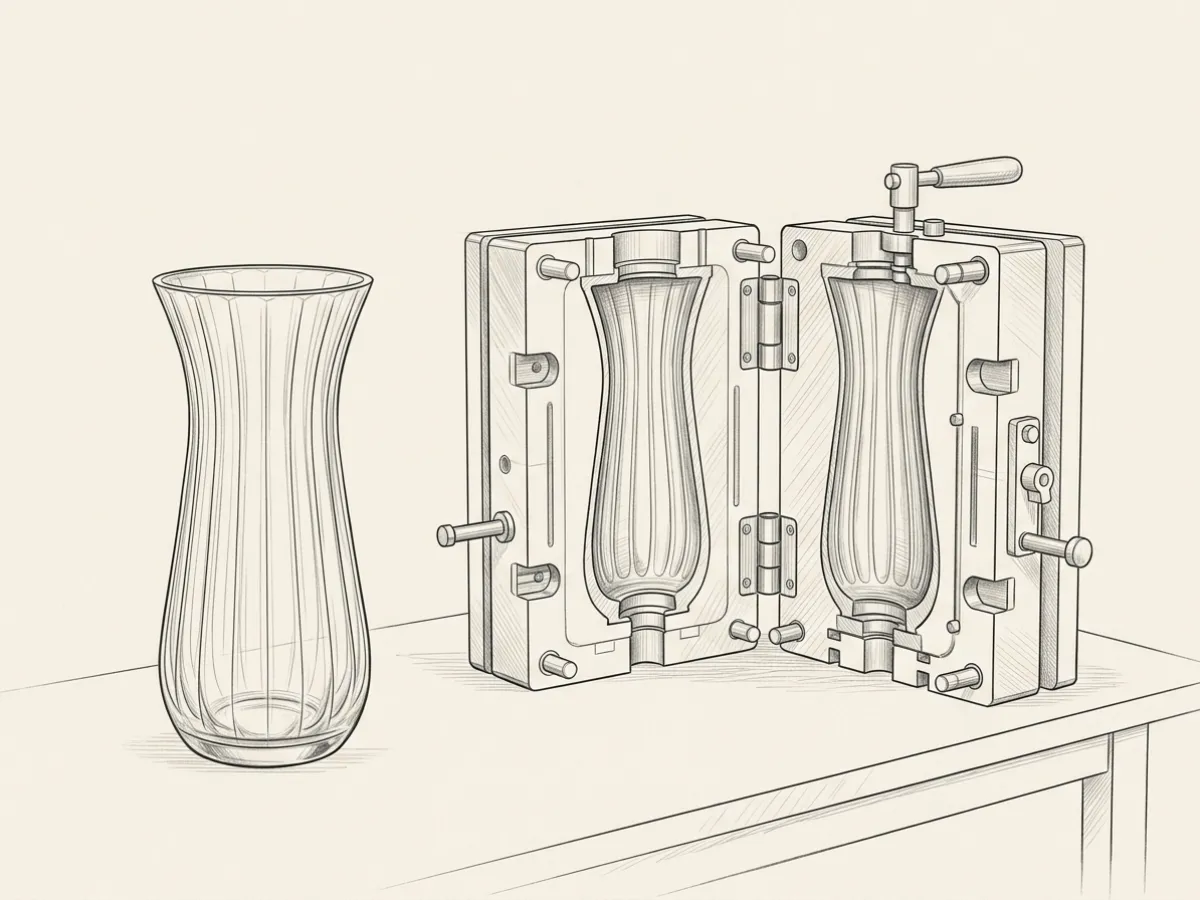
We encountered a good example of this while working with the Krosno glass factory in Poland.
The factory had an extensive archive of historical glass moulds.
One of those existing forms was already beautifully proportioned. There was little reason to redesign the glass simply to create something technically new.
Instead, the form was reinterpreted using a matte black finish.
The underlying mould remained.
The context changed.
The result felt contemporary without requiring unnecessary new tooling.
The project also required mail-order packaging and drop testing so the fragile product could work for a digital-first retail environment.
That combination is important.
The value did not come from redesigning everything.
It came from understanding which parts of the existing system were already good and concentrating design effort on the areas that needed to change.
When should you create new tooling instead?
Existing tooling is not always the right answer.
New tooling becomes more valuable when the current solution prevents you from achieving an important requirement.
For example:
The function is genuinely different
If a new product must move, assemble, perform, or interact differently, existing tooling may constrain the design too much.
The proportions are wrong
A small adjustment may sound simple but require completely different tooling.
If the proportions are fundamental to the product's success, compromise may not be worthwhile.
The existing tool creates unnecessary cost
Sometimes old tooling is technically usable but produces too much material waste, too many parts, or too much labour.
A new tool may create a lower unit cost over time.
The product needs proprietary differentiation
If the competitive advantage depends on a distinctive form or technical solution, owning new tooling may be strategically valuable.
Production volume justifies the investment
Tooling economics change at scale.
An upfront investment that makes little sense for 500 units may be very attractive across 500,000 units.
The decision should therefore be based on lifecycle economics, not simply initial cost.
How should you decide between existing and new tooling?
A useful way to evaluate the decision is to ask five questions.
1. Does the existing tool already solve the important parts of the problem?
If the fundamental form, function, and manufacturing performance are right, reuse may be the stronger option.
2. What measurable value would new tooling create?
Will it improve cost, performance, usability, quality, differentiation, or sales potential?
If the answer is vague, new tooling may be difficult to justify.
3. What is the total tooling investment?
Include more than the tool itself.
Consider development time, engineering, sampling, revisions, testing, delays, and minimum production commitments.
4. What volume will absorb that investment?
A tool should be evaluated against realistic unit volume and expected product life.
5. Is the existing tooling limiting the product or simply limiting the designer?
Those are not the same thing.
Sometimes a constraint prevents a better product.
Sometimes it simply prevents a completely blank-sheet design process.
Good judgement is knowing the difference.
Reuse is often a sign of better design judgement
There is a tendency to treat design value as proportional to the amount of change.
But product development does not work that way.
The designer who changes everything may create more work.
The designer who identifies the one thing that actually needs to change may create more value.
Existing tooling can be a constraint.
It can also be an asset.
The important question is whether it supports the customer, the product, the factory, and the commercial model.
If it does, there is no prize for replacing it.
Good product development is not about designing everything from scratch. It is about knowing what is already working, what needs to change, and where new investment will create the greatest return.
Frequently asked questions
When should you reuse existing factory tooling instead of designing a new product from scratch?
Reusing tooling makes sense when an existing mould, die, extrusion profile, or fixture satisfies the core functional and structural requirements. It reduces upfront capital expenditure, speeds development, lowers technical risk, and lets teams invest in premium finishes and packaging.
How does existing tooling lower product development risk?
Proven tooling has established manufacturing parameters. The factory already understands material flow, tolerances, cycle times, and potential defect areas, eliminating the sampling iterations and unexpected delays associated with new moulds.
Why should designers inspect factory archives during development?
Factory visits often uncover underutilized archival moulds, dormant production capabilities, or standard components that do not appear in catalogues, revealing cost-effective opportunities that cannot be discovered from a desk.
Can a product made from existing tooling still look unique?
Yes. Designers can create strong differentiation through contemporary finishes, custom colors, material upgrades, hardware swaps, refined secondary operations, modern packaging, and targeted merchandising without altering the base tooling geometry.
When is investing in new tooling justified?
New tooling is justified when the product requires proprietary functional features, different proportions, significantly lower unit costs at high volumes, or distinct aesthetic details that existing equipment cannot produce.
How does tooling reuse shorten speed to market?
Eliminating tooling fabrication, testing, and revisions can save weeks or months, allowing brands to proceed directly to sampling, packaging, and commercial launch, which is ideal for seasonal programs and category tests.
See it in practice: Krosno revived an archival glass mould with a modern matte black finish, avoiding costly new tooling while validating a new retail category. Read the case study
Tell us what you are working on.
Send an idea, a drawing, a sample or a whole assortment. We will identify what is missing and the right next step.
Start a conversation