You have probably had this experience already.
An AI-generated image looks impressive at first glance. The lighting is dramatic. The materials are convincing. The composition feels polished.
01
The problem isn't AI. It's the absence of constraints.
You have probably had this experience already.
An AI-generated image looks impressive at first glance. The lighting is dramatic. The materials are convincing. The composition feels polished.
And yet something is wrong.
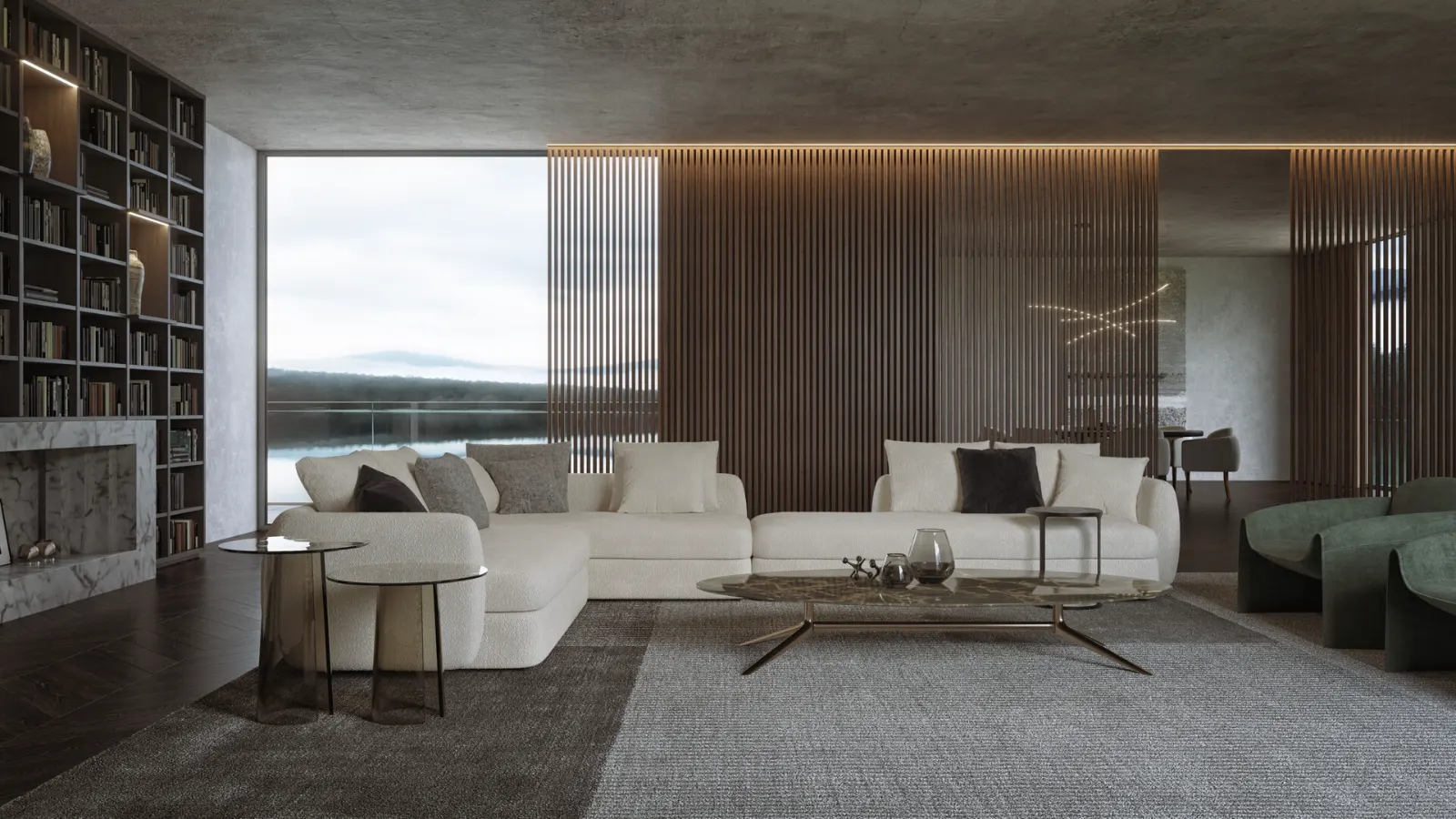
Maybe the window is too large for the room. Maybe the chair is floating a few millimetres above the floor. Maybe the electrical outlets make no sense. The shadows disagree with the light source. A cable disappears into nowhere. The furniture is beautiful, but the room could not actually be built.
Individually, none of these details seems catastrophic.
Together, they make the image feel fake.
The problem is not always that AI lacks creativity. Quite often, it has too much of it.
AI can ignore gravity. It can invent materials, stretch architecture, redesign products, move walls, change proportions, and create scenes that could never exist.
That freedom is extraordinary.
It is also why constraints matter more than ever.
The best AI images are not created by giving AI unlimited freedom. They are created by defining the rules it is allowed to break.
02
01
Reality Has Constraints
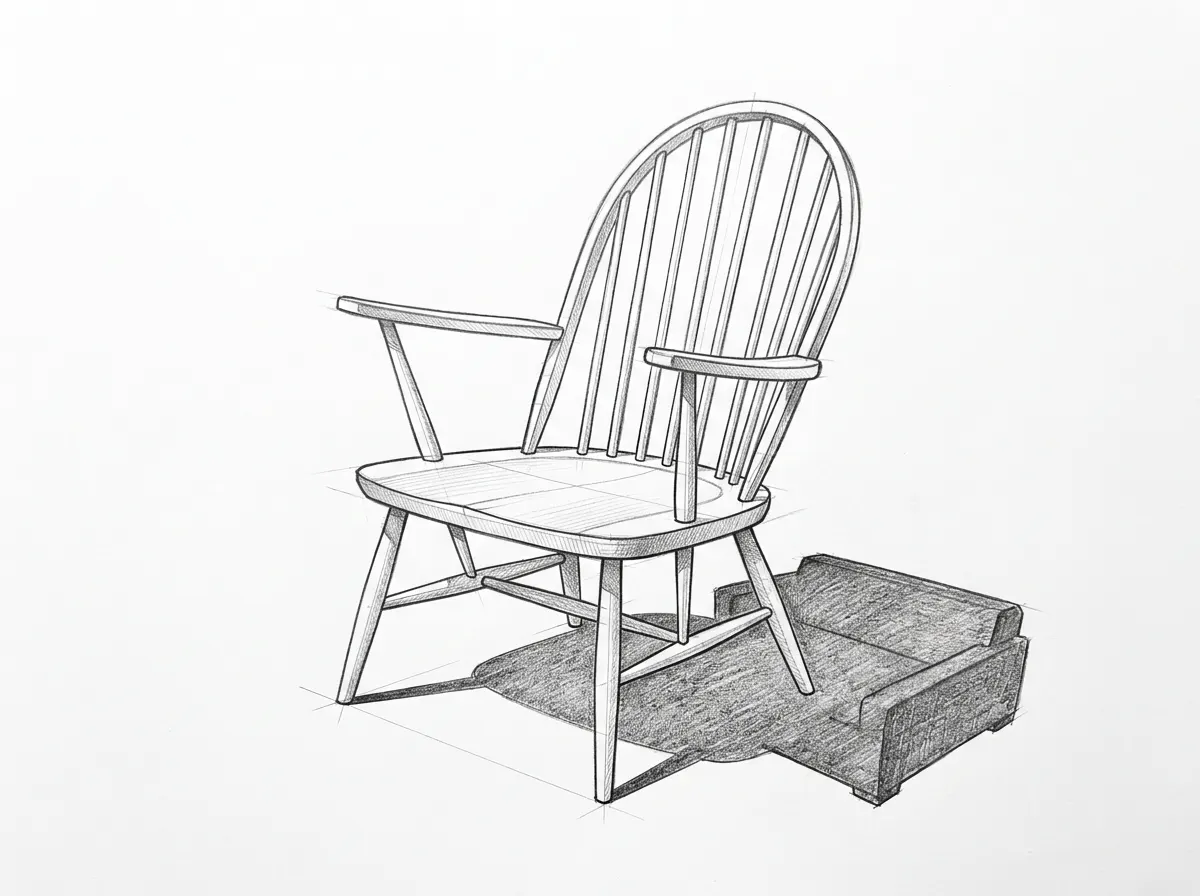
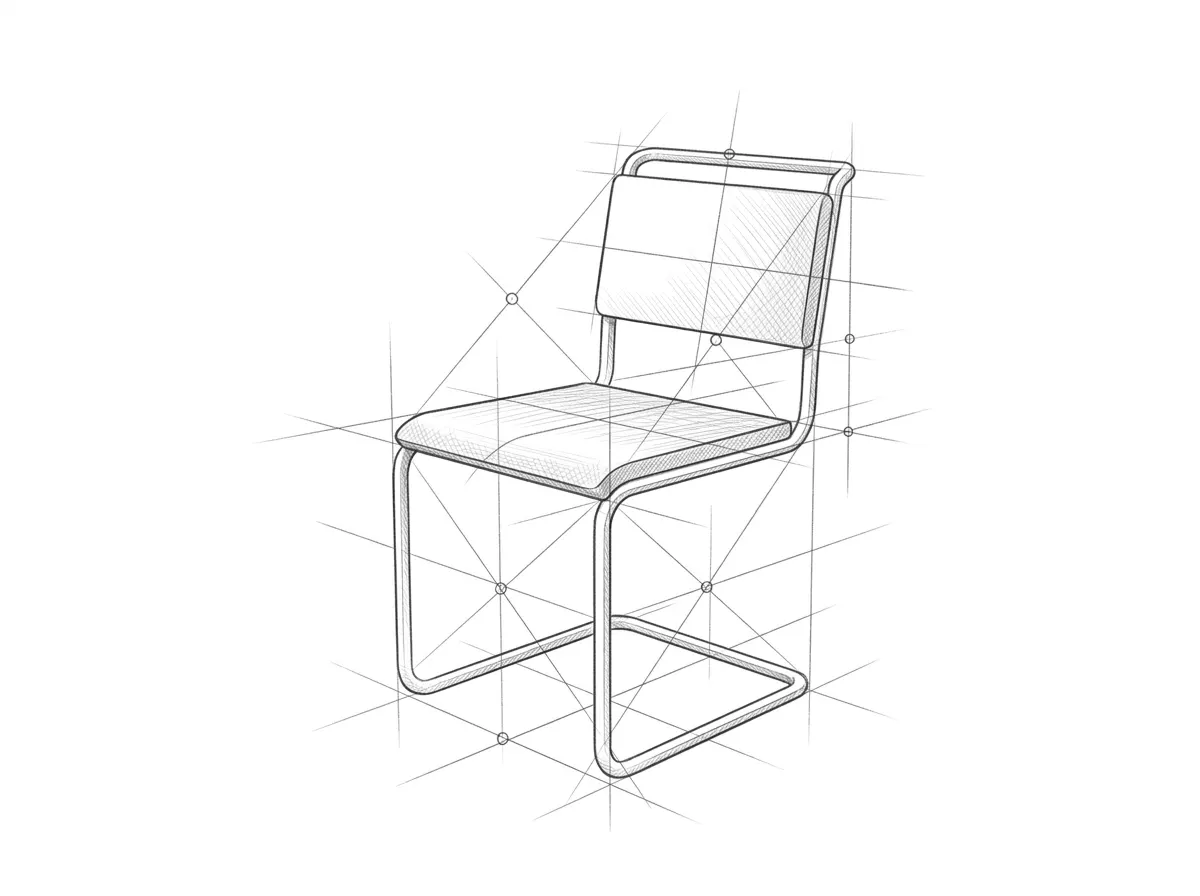
In physical product design, constraints are not the enemy of creativity. They are the beginning of it.
Before designing for a factory, we want to understand what that factory can actually do.
What machines are on the floor? What materials do they work with every day? Do they specialize in bent plywood, veneer, MDF, upholstery, metal fabrication, injection moulding, or something else entirely?
There is little value in designing a product that is technically beautiful but fundamentally wrong for the people who have to manufacture it.
A factory that has spent years bending wood will usually produce a better bent-wood product than a factory being asked to improvise the process for the first time.
The constraint creates the opportunity.
Instead of asking:
What can we design?
The better question becomes:
What is the best thing we can design with these materials, machines, processes, skills, costs, and tolerances?
That is a much more productive creative problem.
The same principle applies to CGI.
And increasingly, it applies to AI.
03
02
[Architectural CGI concept sketch showing a physically plausible room beside an exaggerated unconstrained version](/editorial/sketch_cgi_reality.jpg)

Why Unlimited CGI Often Looks Artificial
One of the great promises of CGI has always been that anything is possible.
That is also one of its biggest weaknesses.
If a room does not need to obey real architectural dimensions, it becomes very easy to create windows that are too large, doors that feel strangely proportioned, impossible ceiling heights, oversized furniture, or lighting conditions that could never exist.
The image may still be beautiful.
But beauty and believability are not the same thing.
When we build CGI environments, we prefer to use real dimensions wherever possible. Real window sizes. Real doors. Plausible room proportions. Accurate interior design conventions. Lighting that behaves as lighting should.
Then we add the details that people rarely think about consciously: - electrical outlets; - cables; - seams and joints; - scratches on a wall; - slight wear on a floor; - imperfect fabric; - fingerprints; - small stains; - material variation; - objects that are not perfectly aligned.
These details do not make an image less sophisticated.
They make it alive.
04
Reality Debt
The Small Errors That Make an Image Feel Wrong
A useful way to think about this is reality debt.
Every time an image ignores a small rule of the physical world, it takes on a little more debt.
One impossible shadow probably will not destroy an image.
Neither will one strangely proportioned door.
Or one overly perfect material.
Or one object with no obvious means of support.
But those inconsistencies accumulate.
Eventually, the viewer may not be able to explain exactly what is wrong, but they can feel it.
That is often what we describe as an AI image looking fake.
The problem is not necessarily one spectacular hallucination.
It is the accumulation of tiny unresolved ones.
Realism is often less about adding detail than it is about removing contradictions.
05
03
AI Needs Guard Rails
As generative AI becomes more capable, simply asking an image model to make something amazing becomes less useful.
The model already knows how to be imaginative.
What it needs is direction.
For commercial imagery, that means giving AI a system of constraints.
Those constraints might include:
Product specifications
Exact dimensions, geometry, construction details, materials, finishes, colourways, and components.
Brand standards
The visual language the company uses consistently - composition, styling, tone, environment, colour, and level of realism.
Image standards
Camera height, focal length, aspect ratio, crop, lighting direction, exposure, depth of field, background treatment, and post-production rules.
Architectural standards
Realistic doors, windows, ceiling heights, clearances, outlets, hardware, and spatial relationships.
Material standards
How wood grain behaves. How fabric folds. How metal reflects. How stone varies. What imperfections are acceptable.
Negative constraints
What the system must not change, invent, distort, simplify, or reinterpret.
Quality-control rules
The checks that happen before an image is approved for use.
This is where AI moves from being an interesting image generator to becoming part of a professional production system.
06
04
Give AI the 80%. Let It Create the Last 20%.
Minimal editorial graphic showing an 80/20 split: 80% defined system, 20% creative freedom
Our preferred approach is not to tell AI exactly what every pixel should look like.
That would defeat much of the point.
Instead, define roughly 80% of the problem.
Give it the product truth.
Give it the brand.
Give it the dimensions.
Give it the material rules.
Give it the camera system.
Give it the things that absolutely cannot drift.
Then leave the remaining 20% open for exploration.
That final 20% is where AI can become genuinely useful as a creative collaborator.
It can suggest an unexpected composition.
A different styling direction.
A better balance of objects.
A surprising environment.
A new way of presenting something we already understand.
The constraints do not eliminate creativity.
They create a useful space for creativity to happen.
07
05
Brand Standards Are Becoming AI Infrastructure
For years, brand guidelines were mostly documents for humans.
They defined logos, fonts, colours, photography, tone of voice, and basic usage rules.
In an AI-driven production system, those standards become something more important.
They become programming inputs.
A company's image standards can increasingly tell an AI system: - what a product must look like; - what it is allowed to change; - what it must preserve; - how scenes should be constructed; - what kind of lighting belongs to the brand; - how materials should be represented; - how much imperfection is appropriate; - which camera language is acceptable; - and what constitutes a failed output.
This means the companies that benefit most from AI may not simply be the ones with access to the best models.
Everyone will have access to powerful models.
The advantage will come from the quality of the system surrounding them.
Your competitive advantage may not be the AI model. It may be the standards, specifications, data, and judgment that tell the model how your world works.
08
06
The Human Has to Get Better Too
There is a temptation to describe AI as a technology that lets humans do less.
We think the more interesting possibility is that it allows humans to get better.
AI can increasingly take over the repetitive parts of production.
Iterations.
Resizing.
Variations.
Background changes.
Asset adaptation.
First passes.
Routine execution.
Those tasks matter, but they also consume time that could be spent thinking.
As execution becomes faster and more abundant, the human role moves upstream.
The work becomes:
Defining the idea.
Setting the constraints.
Building the standards.
Directing the system.
Recognizing drift.
Catching hallucinations.
Knowing when something is technically correct but still wrong.
Deciding what is worth making in the first place.
That requires more judgment, not less.
AI raises the ceiling of what one person can execute.
It also raises the value of knowing what good looks like.
09
Better Constraints. Better Images.
AI does not need us to make it more imaginative.
It is already capable of producing an almost unlimited number of possibilities.
The harder problem is deciding which possibilities belong.
For product brands, CGI studios, designers, and creative teams, that means building clearer systems around the technology:
accurate product data;
strong brand standards;
realistic physical rules;
consistent image specifications;
clear negative constraints;
and human judgment at the points that matter.
Constraints are not the opposite of creativity.
They are what turn creativity into something coherent, repeatable, believable, and commercially useful.
And as AI becomes capable of doing almost anything, knowing what it should do may become one of the most valuable creative skills we have.
The Decision Rule
Define the 80% that must be true. Protect it with standards and specifications. Then let AI be creative inside the remaining 20%.
Vux & Hoy explores how product design, CGI, and AI can work together to create faster, more consistent commercial image systems.
Frequently asked questions
Why do AI-generated product images look fake?
AI images often look fake not because of one dramatic hallucination, but because small physical inconsistencies accumulate. When an image ignores subtle rules of lighting, shadows, architectural proportions, material textures, and physical support, these unresolved errors create reality debt that viewers intuitively detect as artificial.
How do physical constraints improve AI images?
Constraints establish the physical rules an AI system must respect. Defining real architectural dimensions, product geometry, material behaviours, camera angles, and lighting parameters prevents the model from inventing impossible proportions, ensuring the output looks believable and grounded in reality.
What is the 80/20 rule for AI image generation?
The 80/20 rule defines roughly 80 percent of the problem upfront - including exact product dimensions, brand standards, material properties, and camera rules - while leaving the remaining 20 percent open for creative AI exploration in composition, styling, and environmental balance.
What is reality debt in AI imagery?
Reality debt is the accumulation of small physical and architectural contradictions in an image. While a single misplaced shadow or oversized window might go unnoticed, multiple minor inconsistencies compound until the overall scene feels unnatural to the viewer.
How do brand guidelines function as AI infrastructure?
In an AI production workflow, brand guidelines act as programming inputs. They instruct the generative model on required camera angles, acceptable lighting conditions, material behaviours, level of realism, and negative constraints that define what the system is never permitted to alter.
What guard rails does AI need for commercial product imagery?
Commercial AI pipelines require product specifications, brand visual standards, camera and image rules, realistic architectural clearances, material behaviour definitions, negative constraints, and human quality-control gates before any generated image is approved for commercial use.
Continue with the next question: Why is generic product photography a hallucination risk for AI shopping agents? →