Manufacturing constraints are often treated as limitations.
In reality, they can be one of the most useful inputs in the entire product development process.
Manufacturing constraints are often treated as limitations.
In reality, they can be one of the most useful inputs in the entire product development process.
The right constraints help teams make better decisions earlier. They reduce unnecessary complexity, reveal cost and production risks, and force designers to focus on the parts of a product that create the most value.
The problem is not usually that manufacturing imposes too many constraints.
It is that those constraints are discovered too late.
01
What are manufacturing constraints in product design?
Manufacturing constraints are the practical limits of how a product can be made.
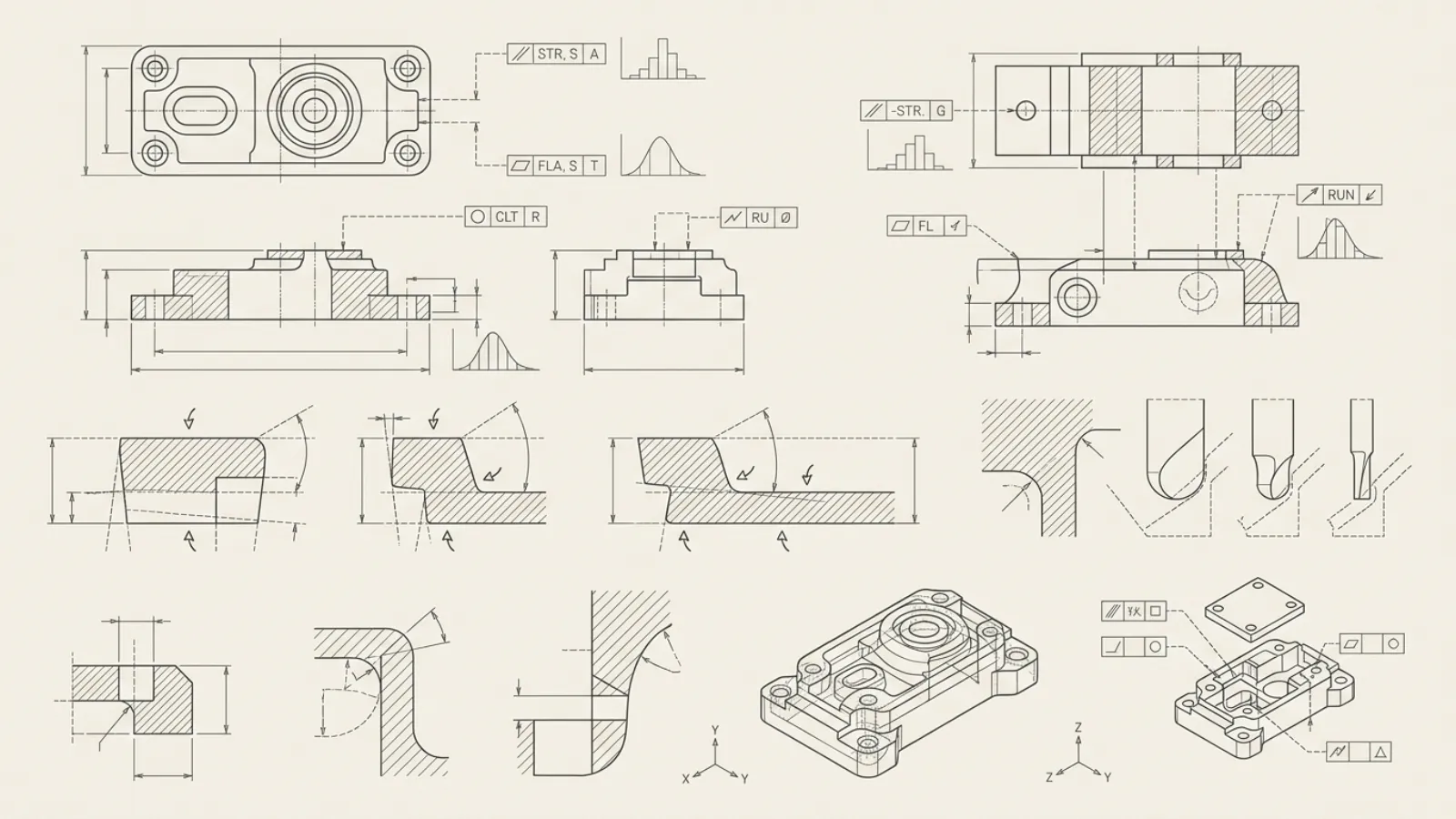
They include things like: - available machinery - tooling - material sizes - forming processes - tolerances - assembly methods - finishing capabilities - labour requirements - production volume - minimum order quantities - packaging limits - quality requirements - lead times
These constraints define the real solution space.
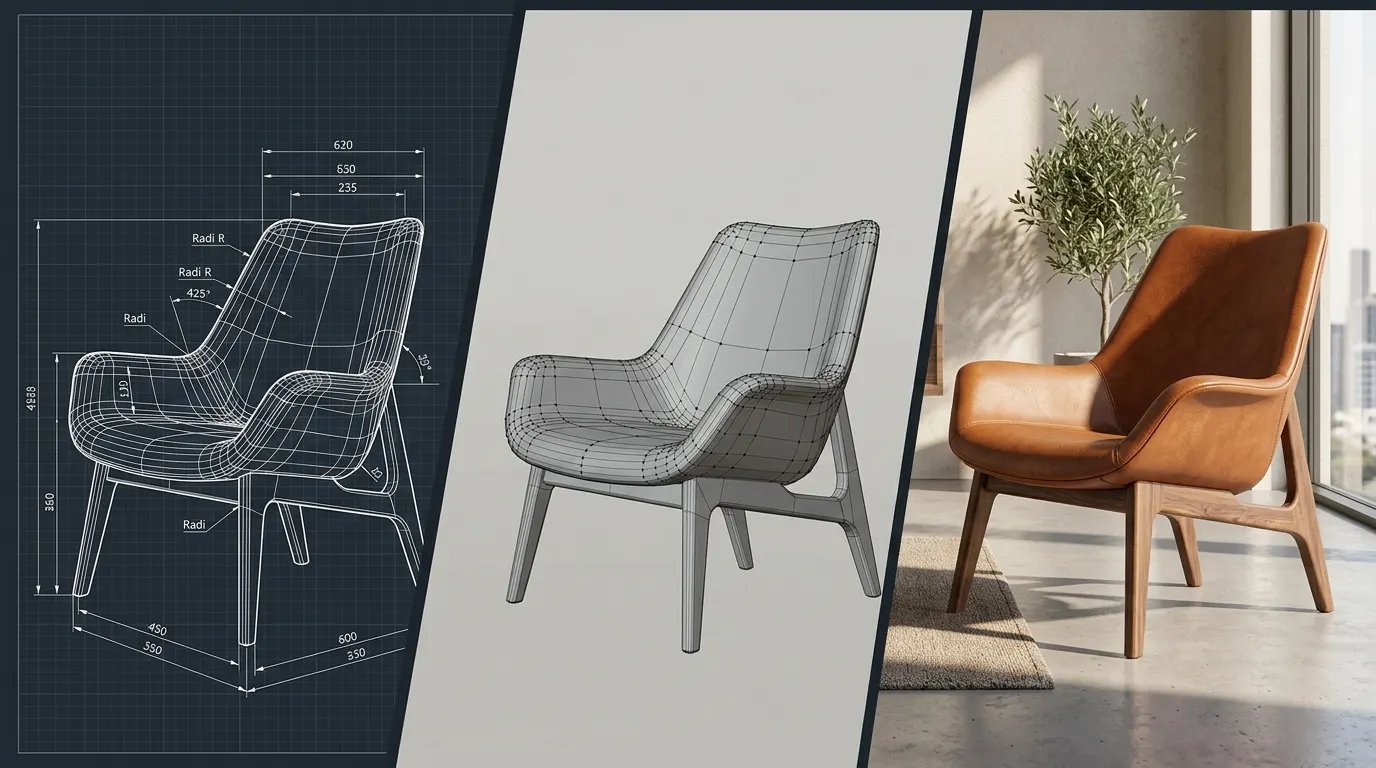
A concept can look excellent on screen and still be a poor product if it requires manufacturing methods the factory cannot execute reliably or economically.
That is why manufacturability should not be treated as an engineering check at the end of the design process.
It should influence the design from the beginning.
02
Constraints help designers focus
A blank sheet sounds creatively liberating.
But unlimited choice can create unnecessary complexity.
If you know from the beginning that a factory works efficiently with certain materials, dimensions, machinery, and processes, the design problem becomes more specific.
That does not eliminate creativity.
It tells creativity where to work.
Instead of asking:
What could this product possibly be?
You can ask:
What is the best product we can create within this manufacturing system?
That is a much more commercially useful question.
03
Manufacturing constraints reduce redesign
One of the most expensive product development mistakes is solving manufacturability after the concept has already been approved.
A common sequence looks like this:
Design creates the concept.
Engineering tries to make it work.
Sourcing finds a supplier.
The supplier identifies problems.
The design changes.
Cost increases.
Another sample is made.
Packaging reveals another issue.
The design changes again.
Every late discovery creates rework.
If the manufacturing constraints are understood early, many of those loops disappear.
The designer can make decisions with production reality already in mind.
04
Factory capabilities should influence the concept
Factories are not interchangeable.
Two factories producing similar categories can have completely different strengths.
One may specialize in bent plywood.
Another may be excellent at solid wood machining.
One may have sophisticated CNC capability.
Another may rely heavily on manual processes.
One may already run powder coating internally.
Another may outsource finishing.
Those differences matter.
If a factory does not have the process required by the design, you have several options: - change the design - add another supplier - invest in new tooling or machinery - outsource part of the process - or choose a different factory
Each option adds cost, complexity, risk, or time.
A better approach is often to understand the factory first and design intelligently within its strengths.
05
Constraints can improve cost
Manufacturing cost is rarely driven by material alone.
Complexity creates cost.
Extra operations create cost.
Tight tolerances create cost.
Multiple finishes create cost.
Unusual hardware creates cost.
Manual assembly creates cost.
Low-volume bespoke processes create cost.
When designers understand those relationships, they can decide where complexity is worth paying for.
A detail that materially improves function or customer perception may justify the extra operation.
A detail that exists only because it looked interesting in a rendering may not.
Constraints encourage that prioritization.
06
Constraints can improve quality
More complexity also creates more opportunities for variation.
Every component has tolerances.
Every assembly step introduces potential error.
Every finish adds another quality control point.
Every supplier handoff adds risk.
Simplifying a product around proven manufacturing processes can improve consistency as well as cost.
That matters at scale.
A product that works perfectly as a prototype is not necessarily a good production design.
A production design needs to work repeatedly.
Thousands of times.
07
Constraints can improve speed to market
Understanding existing production capabilities can also shorten development timelines.
If a design works with: - existing tooling - standard materials - proven hardware - known finishes - established suppliers
then there is less to validate before production.
New processes often require more sampling, testing, troubleshooting, and supplier coordination.
That does not mean new processes should be avoided.
It means they should be introduced intentionally, when the benefit is worth the development effort.
08
The factory can be part of the creative process
One of the most valuable things a designer can do is speak directly with the people making the product.
Factory teams often know where a product can be simplified.
They know which process is unstable.
They know which material causes problems.
They know which detail adds disproportionate labour.
They know which machine is underused.
They know which existing tool or component might solve the problem differently.
Those insights are difficult to get from a specification sheet.
This is why factory collaboration should not happen only after the design is finished.
The factory can be part of the design process.
09
Constraints can reveal opportunities
Manufacturing constraints do not only tell you what cannot be done.
They can reveal what can be done unusually well.
A factory might have: - unused tooling - a particular finishing capability - specialized machinery - access to a local material - highly skilled labour - an efficient production method - components already running at scale
Those existing assets can become the basis of new product ideas.
In some cases, the best design brief is not:
Create something completely new.
It is:
Find a better use for what the factory already does exceptionally well.
10
Constraints can create differentiation
There is a misconception that designing around manufacturing constraints leads to generic products.
It can do the opposite.
A factory-specific capability can become part of the product language.
A particular joinery technique.
A characteristic radius.
A manufacturing process.
A local material.
A specific finishing method.
When those capabilities are used intentionally, the constraints can create a design language that competitors cannot easily reproduce.
Differentiation does not always require ignoring manufacturing limitations.
Sometimes it comes directly from them.
11
Constraints should include the commercial model
Manufacturing does not exist separately from the economics of the product.
Production volume matters.
MOQ matters.
Tooling investment matters.
Assembly time matters.
Yield matters.
Packaging matters.
Shipping matters.
A design that requires a large capital investment may make sense for a high-volume product and make no sense for a test launch.
A labour-intensive detail may work for a premium product but destroy the margin of an entry-price product.
The same design decision can be right or wrong depending on the commercial context.
That is why manufacturing constraints and commercial constraints should be evaluated together.
12
A constraint is useful when it is specific
Vague constraints are difficult to design around.
“Make it affordable” is not particularly useful.
A better constraint is:
The product must hit a specific target cost at a specific production volume.
“Keep it easy to manufacture” is vague.
A better constraint is:
The product must use processes already available at the nominated factory.
“Make it compact” is vague.
A better constraint is:
The packed product must stay within a defined parcel size and weight.
Specific constraints create clearer decisions.
13
When do constraints become a problem?
Constraints become harmful when they prevent the product from meeting an important customer or business requirement.
If a factory limitation forces poor ergonomics, bad quality, unsafe construction, unacceptable cost, or weak differentiation, the constraint may need to be challenged.
The goal is not to accept every limitation.
The goal is to understand which constraints are useful and which ones prevent the product from succeeding.
Sometimes the right answer is to redesign.
Sometimes it is to invest in tooling.
Sometimes it is to move production.
Good product development depends on knowing the difference.
14
So, how do manufacturing constraints improve product design?
They make the problem real.
They force teams to prioritize.
They expose cost and technical risk earlier.
They reduce avoidable redesign.
They encourage designers to work with manufacturing strengths rather than against them.
And they can reveal opportunities that would never emerge from a purely conceptual design process.
The best products are not created by ignoring constraints.
They are created by understanding them early enough to use them.
Manufacturing constraints do not reduce design freedom. They help direct design effort toward the decisions that matter most.
Frequently asked questions
How do manufacturing constraints improve product design?
Manufacturing constraints define the practical solution space early, preventing expensive redesigns. They force designers to focus on viable materials, available machinery, realistic tolerances, and target costs, directing creative energy toward solutions that can be produced reliably.
Why does solving manufacturability late increase product costs?
Discovering production limitations after concept approval triggers costly redesign loops, supplier changes, tooling modifications, re-sampling, and packaging delays that inflate development budgets and postpone launch dates.
Can manufacturing constraints create distinctive product design?
Yes. Incorporating a factory's specialized machinery, unique joinery methods, local materials, or signature finishing capabilities into the design creates a proprietary aesthetic that competitors cannot easily copy.
How do manufacturing constraints enhance product quality?
Designing around proven factory capabilities and standard tolerances reduces assembly complexity and part counts, minimizing production variation and ensuring consistent build quality across high-volume production runs.
Why should commercial constraints be evaluated alongside manufacturing limits?
Manufacturing feasibility depends on commercial reality. Production volume, minimum order quantities, target retail price, and freight packaging dictate whether a specific tooling investment or labour-intensive detail is economically viable.
When should a designer challenge a manufacturing limitation?
Constraints should be challenged when factory limitations compromise safety, ergonomics, durability, essential functionality, target margins, or the core value proposition required by the customer.
See it in practice: Krosno designed around minimum order quantity realities and mail-order drop-testing constraints to bring fragile glassware successfully into e-commerce. Read the case study →
Continue with the next question: When should you reuse existing factory tooling instead of designing from scratch? →